Rosemary from Seed or a Starter Plant: Choose Before You Sow


If you want rosemary for the kitchen, decide how you want to start before you buy seed. A seed project gives you the chance to follow the plant from the beginning. A starter plant lets you begin with a plant you can already inspect. Those are different projects, even when the eventual goal is the same.
Leave room for a slow start
University of Maryland Extension's rosemary guide says rosemary can be grown from seed or propagated by cuttings, and warns that seed can be slow to germinate. A packet is not a promise of a quick harvest.
Our suggestion: choose seed when the process itself interests you and your plans can tolerate uncertainty. If you need an established plant for a particular occasion, look at starter plants before committing to sowing. Check their condition and care instructions rather than assuming that any plant will suit your space.
Make the packet part of your records
Maryland Extension's herb-starting guide recommends following packet directions. Keep those directions with your notes instead of substituting a generic planting depth or timetable.
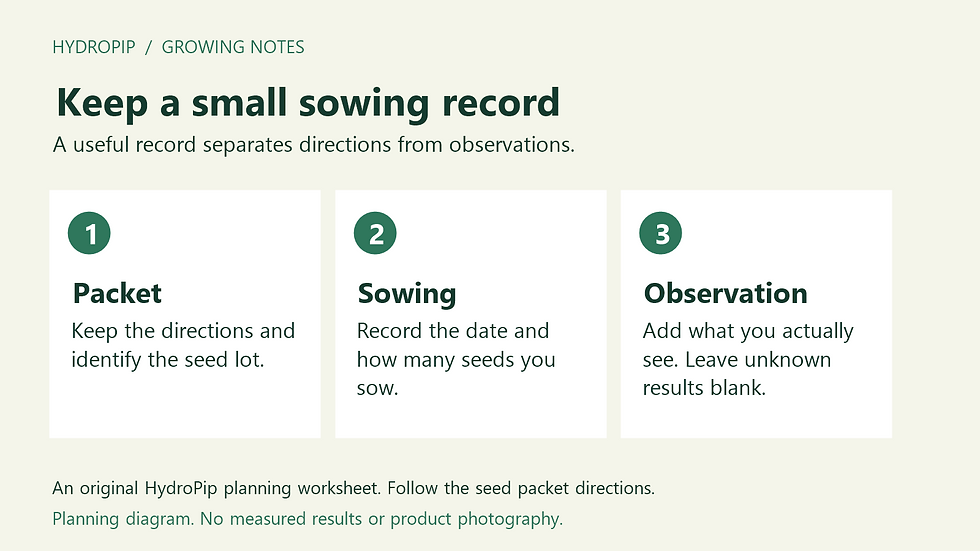
For a simple record, photograph the packet, note the sowing date and count what you sow. Add the date when you first see a seedling. Leave the result blank until you observe it. That gives you a useful account of your own attempt without turning somebody else's germination claim into your expectation.
A seed option to compare
As an Amazon Associate I earn from qualifying purchases. This article contains affiliate links; we may earn a commission if you buy through them.
KVITER rosemary seeds on Amazon are an option if you have decided that starting from seed fits your project. Check the current packet and planting directions before ordering. We have not tested this seed lot, measured germination or compared its performance with other products.
Skip a new purchase if you already have suitable seed and readable instructions. An established rosemary start is also worth considering when your priority is caring for a plant rather than starting one from seed.
Keep container advice in context
The Maryland rosemary guide describes full sun and well-drained soil. It does not establish a hydroponic nutrient recipe, pump schedule or tower compatibility. We would not turn those soil recommendations into settings for a shared reservoir.
For a HydroPip project, write down where you intend to grow the plant and which growing instructions apply there. Resolve the setup question before treating a seed purchase as a complete growing plan.
Visit HydroPip for the next step in planning your growing setup. Bring your packet directions and your observations; those details make the next decision easier.


Comments